
How to Improve Heavy Clay and Alkaline Soil
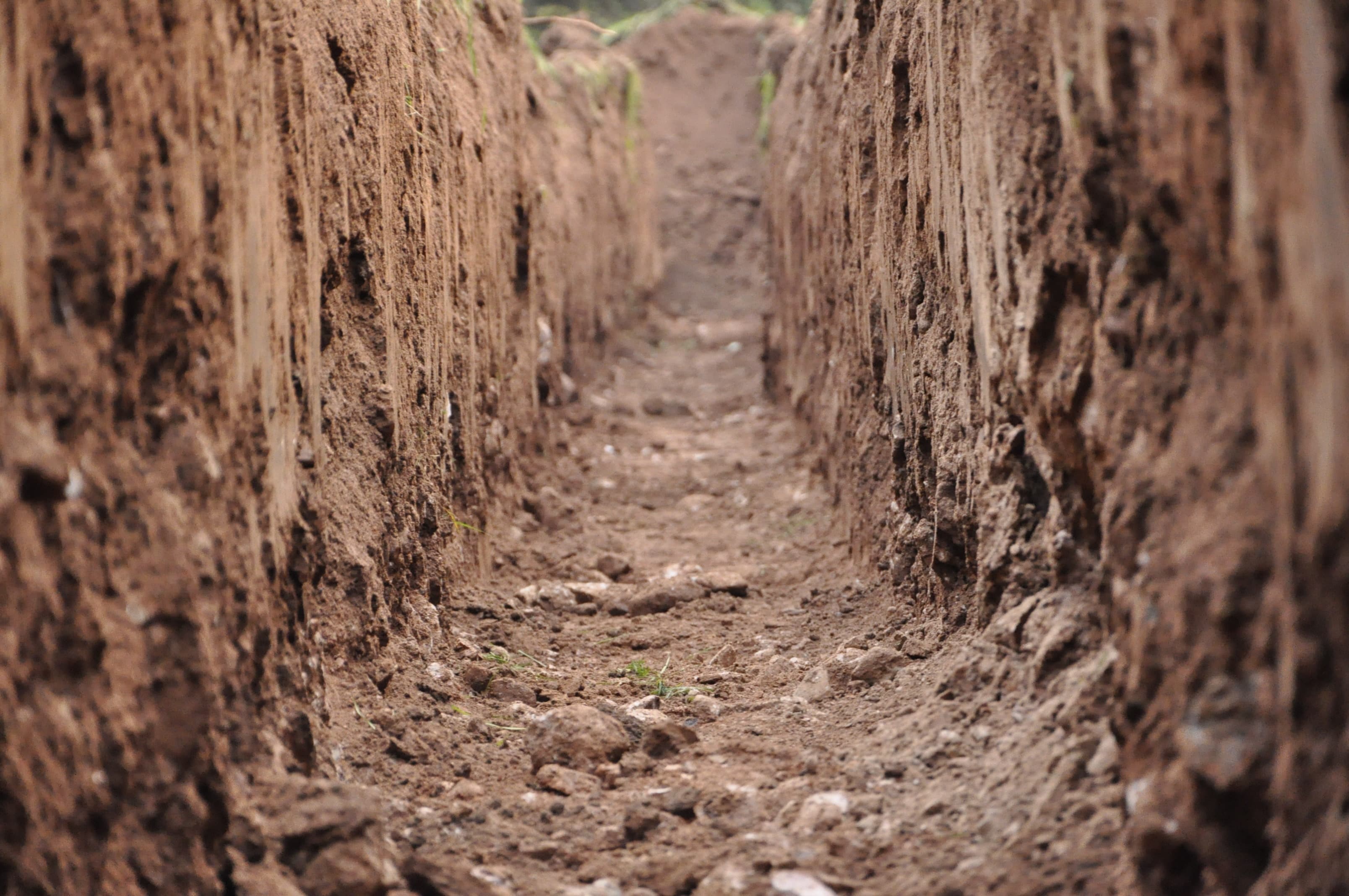
Tbilisi's heavy clay is improved by organic matter and gypsum — not sand. Sand mixed into clay makes something close to concrete. Work 5–10 cm of compost into the top 20–30 cm, add gypsum for structure, mulch, and repeat annually. Because this soil is also limey (pH above 7.5), choose plants that tolerate alkalinity rather than trying to fight the pH.
Why Tbilisi soil behaves the way it does
Most soils in Tbilisi and the surrounding area formed over clay-limestone parent rock. That has three practical consequences.
- Heavy texture. After rain the soil is sticky and water sits on the surface; once dry it sets like stone and cracks. Roots run short of oxygen — from waterlogging in winter, and from a compacted layer in summer.
- Free lime and high pH. Soil pH is usually above 7.5. At that level iron and phosphorus are locked up: they are physically present in the soil but unavailable to the plant.
- Chlorosis. The most common visible symptom — young leaves turn yellow while the veins stay green. This is not nitrogen deficiency, and nitrogen fertilizer will not fix it.
Before you add anything, it is worth running a soil analysis. Two yards next door to each other often give completely different readings — especially in newly built districts where the topsoil has been replaced with construction fill.
What actually improves clay, and what makes it worse
Organic matter is the main lever. Mature compost, well-rotted manure, or leaf mould. Spread a 5–10 cm layer evenly and work it into the top 20–30 cm. Organic matter binds clay particles into aggregates, and those aggregates are what create the channels air and water move through.
Gypsum (calcium sulphate) improves structure without raising pH. This distinction matters: lime also supplies calcium, but it raises pH too — the last thing you need here. Gypsum delivers calcium while leaving pH essentially unchanged. The correct rate depends on your analysis; a common starting point is 1–2 kg per square metre, applied in autumn or before spring growth.
Sand — no. This is the most common and most expensive mistake we are called out to fix. For sand to change the texture of heavy clay, you need more sand by volume than there is clay. Anything less does the opposite: you get a dense, cement-like layer a spade will not cut.
Never work clay when it is wet. Digging or rotavating wet clay destroys its structure, and that damage is not quickly undone. A simple test: squeeze a handful. If the ball smears and sticks to your hand, it is too early. If it holds together but crumbles under thumb pressure, you can start.
Raised beds are a legitimate alternative. When fixing the whole profile is unrealistic, a 30–40 cm raised bed filled with improved soil is faster and cheaper. For ornamental shrubs and vegetables it is often simply the better answer.
Live with alkaline soil instead of fighting it
Lowering the pH of an entire garden in Tbilisi is not practical. The reason is the free lime: it acts as a buffer and neutralises every acidifying amendment you add. You are not fighting the soil, you are fighting the bedrock underneath it.
What does work is targeted, local intervention:
- Elemental sulphur on a small area — one bed, one container, one planting pit. It acts slowly and its effect fades over a few seasons, so it needs repeating.
- Iron chelate, specifically the EDDHA form. Above pH 7.5 the cheaper EDTA and DTPA chelates break down in the soil and do nothing. This single detail often decides whether chlorosis treatment works.
- Permanent mulch. A 5–7 cm layer of bark or compost slowly enriches the top layer, holds moisture, and shields the root zone from summer heat.
Plants that do well on limey clay here: lilac (Syringa vulgaris), forsythia, spiraea, cotoneaster, viburnum, juniper, thuja, box (Buxus), lavender, rosemary, hawthorn, hackberry (Celtis australis), pomegranate, fig, almond, and grapevine. For lawns, tall fescue (Festuca arundinacea) handles heavy alkaline ground better than most grasses — which is why it goes into our mixes for lawn installation.
Plants that struggle: rhododendron, azalea, blueberry, and blue hydrangea — that last one needs acidic soil to hold its blue colour, which in Tbilisi realistically means a container.
A realistic schedule
Autumn is the best time to start. Winter frost and rain break the clods apart for you, and the organic matter has until spring to break down.
- Year one. Analysis, compost and gypsum worked in, then mulch. You will see a difference, but the soil is not rebuilt yet.
- Year two. Add 3–5 cm of compost on the surface, without deep cultivation. By this point earthworms and roots continue the work themselves.
- After that. Annual mulching and returning garden waste to the ground. This is part of seasonal agrotechnical works and no longer takes sustained effort.
The main cost driver is compost volume: a 5 cm layer over 100 square metres is 5 cubic metres. Delivered price depends on the supplier and the season — ask for a current quote before ordering.
Frequently asked questions
In practice, no. To change the texture of heavy clay you need more sand by volume than there is clay. A small amount makes things worse and creates a dense, cement-like layer. The same money spent on compost will do far more for you.
Look at which leaves are yellowing. Iron chlorosis shows first on young, upper leaves and the veins stay green. Nitrogen deficiency is the opposite — older, lower leaves yellow evenly. On alkaline soil the first is much more common.
Autumn. Winter frost and rain break the clods apart for you, and organic matter has until spring to break down. Spring is possible too, but only once the soil has dried enough to work without smearing.
Not across a whole garden. The free lime in Tbilisi soil acts as a buffer and neutralises every acidifying amendment you add. In an individual bed or container you can lower pH with elemental sulphur, but the treatment has to be repeated periodically.
A symptom tells you a problem exists, but not its scale and not the correct dose. How much gypsum, sulphur, or fertilizer to apply depends on actual readings — applying without them is money spent on guesswork.
Related services
- Yard Care and Subscription ServiceA care service for green spaces and yards. Customer-tailored scheduling and a dedicated gardener service.
- Seasonal Agrotechnical WorksGrass mowing, tree and shrub pruning and shaping, disease and pest control, soil analyses, and other seasonal works.
- Premium-Quality Lawn InstallationLawn seeding, care, and rehabilitation. Premium rolled-sod installation on any terrain and at any location.