
Growing an Olive Tree in Georgia — Planting, Winter, and Care
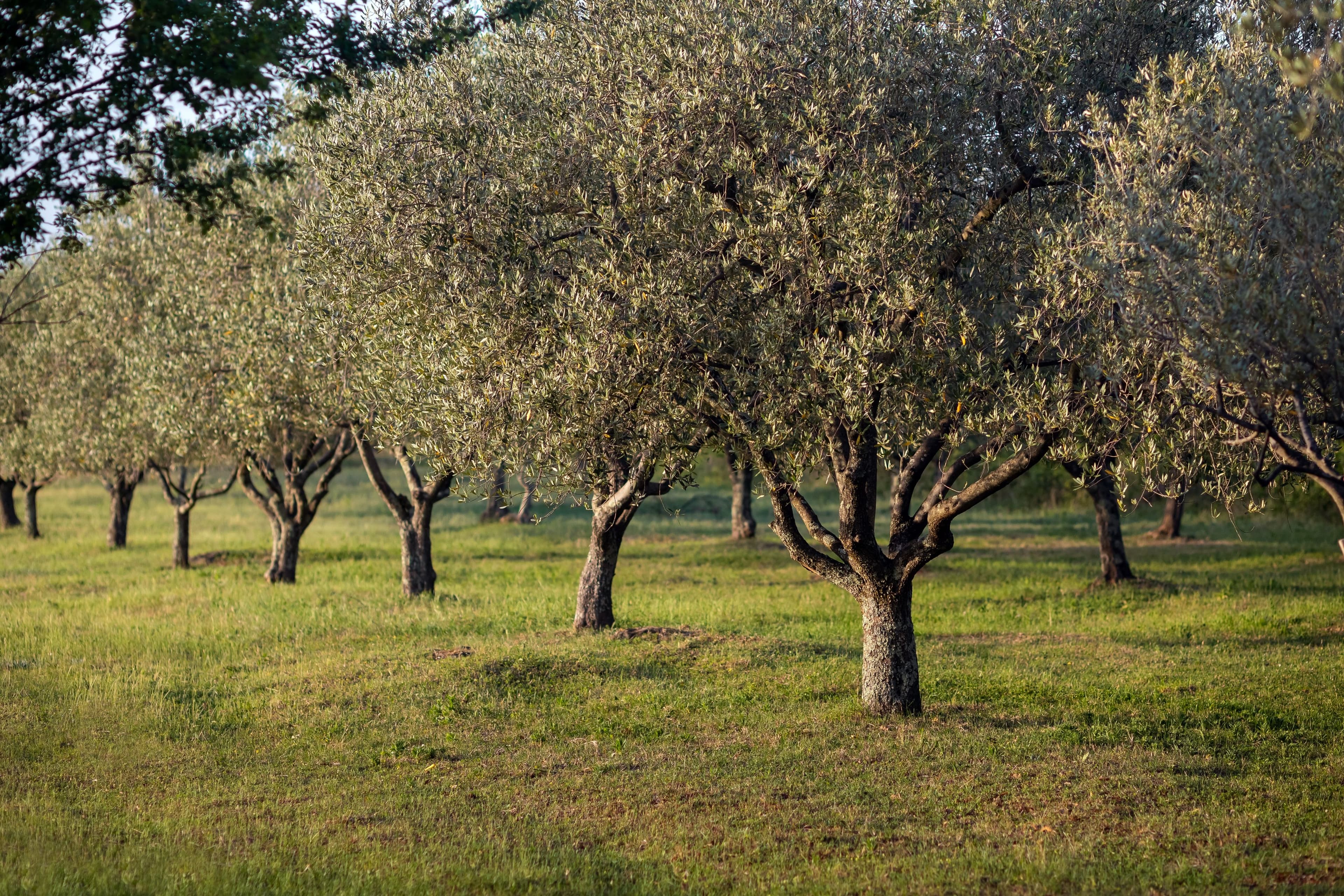
Yes — an olive tree (Olea europaea) grows and overwinters outdoors in Tbilisi. Heat and lime are not the problem; this tree is built for both. What kills olives here is a hard winter on an exposed site, and heavy clay that holds water around the roots. Position and drainage decide the outcome; the rest is straightforward.
Will it survive a Tbilisi winter
The honest answer is: in the right place, yes.
A mature olive tolerates roughly −12 °C. Ordinary Tbilisi winters stay inside that. The risk is the exceptional winter, and three things decide how your tree meets it.
- Age. The first two or three winters are the dangerous ones. Almost every olive we are called out to has died young, not old.
- Position. A wall-backed spot facing south or south-west in the lowland city is a different climate from an open slope where wind strips the heat away. Cold air also pools at the bottom of a slope — a frost pocket can sit several degrees colder than ground twenty metres above it.
- Late feeding. A tree pushed with nitrogen at the end of the season enters winter carrying soft, unripened growth, and that is what frost destroys. Stop feeding after August.
In the higher districts above the city, and in the mountain regions generally, an olive needs winter protection or a container it can be moved in.
Why lime helps and clay hurts
This is the part that surprises people. Tbilisi's clay-limestone soil sits above pH 7.5, and for most ornamental plants that alkalinity is a permanent handicap: iron locks up and young leaves go chlorotic. The olive does not care. It evolved on limestone hillsides around the Mediterranean, and free lime is its home ground. You do not need to acidify anything for it.
The clay is the problem, not the pH. Olive roots will not tolerate standing water. In heavy Tbilisi clay a planting hole dug straight into undisturbed subsoil becomes a bucket — rain runs in, nothing drains out, and the roots suffocate over winter. This is the most common way an olive dies here, and it is nearly always misread as cold damage.
Two fixes, in order of preference:
- Plant on a raised mound. Build the planting position 25–40 cm above the surrounding grade using improved soil. The root crown then sits permanently above the waterline.
- Widen the hole and break the walls. Dig three times the width of the root ball but no deeper than it, loosen the base, and score the sides. Polished clay walls make roots circle as though they were still in a pot.
Never backfill a clay hole with pure compost or with sand. Compost on its own holds water like a sponge; sand mixed into clay sets close to concrete. Blend the excavated soil with coarse grit and a moderate amount of organic matter.
Planting — when and how
Plant in autumn, October into November. Roots establish through the cool, wet months and the tree meets its first summer already anchored. Spring planting works but commits you to a full season of watering. Do not plant in June or July.
Practical points:
- Full sun, not "mostly sunny". In shade an olive grows thin, leggy and disappointing.
- Keep it at least 4–5 m from a building foundation or another large tree.
- Stake only on a windy site, and remove the stake after the second year. Movement is what thickens a trunk.
- Mulch with gravel or stone rather than bark — it keeps the surface dry and reflects heat back into the canopy.
For a commercial planting the order of work is different: soil analysis, variety selection, spacing and irrigation design all come before anything goes into the ground. That is the same sequence used for vineyard and orchard projects and it runs under agro project management.
Watering, pruning and feeding
Water rarely and deeply. Through the first two summers, 25–40 litres once a week beats a daily surface sprinkle, which pulls roots upward and leaves the tree permanently dependent. From the third year an established olive in Tbilisi usually needs water only in an extended drought. If the yard is on automatic irrigation, give the olive its own zone — it must never share a schedule with a lawn, which wants many times more water.
Prune in late winter or early spring, before growth starts, and keep it light. Olive carries its fruit on the previous year's wood, so hard cutting removes the crop. Open the centre so light and air get inside, take out crossing branches and dead wood, and remove the suckers that rise from the base. Timing for other trees and shrubs is set out in our pruning guide.
Feed in spring only. A balanced fertiliser as growth starts is enough for a yard tree.
Will it actually fruit?
Often, yes — but plant it for the tree, and treat fruit as the bonus.
An olive needs a genuinely cool winter to set flower and a warm summer to ripen the fruit, and Tbilisi supplies both in most years. A nursery tree normally takes a few years after planting before it bears, and yields swing widely: olives alternate between a heavy year and a light one by nature.
Most varieties also fruit far better with a second, different variety nearby to cross-pollinate. If fruit is the point, plant two.
If what you want is silver foliage and a Mediterranean look, none of this matters — and on that count the olive is one of the most dependable of the drought-tolerant trees for a dry Tbilisi yard.
Growing an olive in a pot
A container olive makes sense for a balcony or a paved courtyard, and for the higher, colder locations where an exceptional winter is a real risk.
- Use a large container with a genuinely open drainage hole and a free-draining mix with grit in it.
- Water when the top few centimetres are dry. Pots dry out fast in July, and an olive in a pot is far less drought-proof than the same tree in the ground.
- Move it against a sheltered wall, out of the wind, for winter. Roots in a container are exposed to cold from every side in a way ground roots never are.
- Repot or root-prune every few years, and refresh the top layer of the mix annually.
A container tree is also the safest way to try an olive before committing a permanent position in the garden to one.
Frequently asked questions
A mature tree tolerates roughly −12 °C and overwinters well in a sheltered spot in the lowland city. The vulnerable period is the first two or three winters; exposed slopes and frost pockets at the bottom of a slope are the risky positions. Above the city and in the mountain regions it needs winter protection or a container that can be moved.
No. The olive evolved on limestone hillsides, so Tbilisi's alkaline, limey soil suits it. There is no point acidifying the ground for it — put the effort into drainage rather than pH.
In Tbilisi the usual cause is a planting hole dug into heavy clay, which holds water like a bucket and suffocates the roots. It is commonly mistaken for frost damage. Plant on a raised mound, widen the hole, and score the clay walls.
A nursery tree normally takes a few years after planting to start bearing, and the crop swings between heavy and light years. Yields improve considerably if a second, different variety is planted nearby for cross-pollination.
Late winter to early spring, before growth starts, and lightly. Olive fruits on the previous year's wood, so hard cutting removes the crop.
Related services
- Agro Project Management and Technical SupervisionAn agro line focused on agricultural projects: agronomic consulting, project management, intensive orchards, and vineyard establishment.
- Seasonal Agrotechnical WorksGrass mowing, tree and shrub pruning and shaping, disease and pest control, soil analyses, and other seasonal works.
- Automatic Irrigation SystemsDesign and installation of automatic irrigation systems.